I have been translating and illustrating classical Chinese poetry for kicks. I strive for English translations that are good modern poems, in the hope that poems written many millenia ago in a foreign language can have some relevance to a modern reader in English.
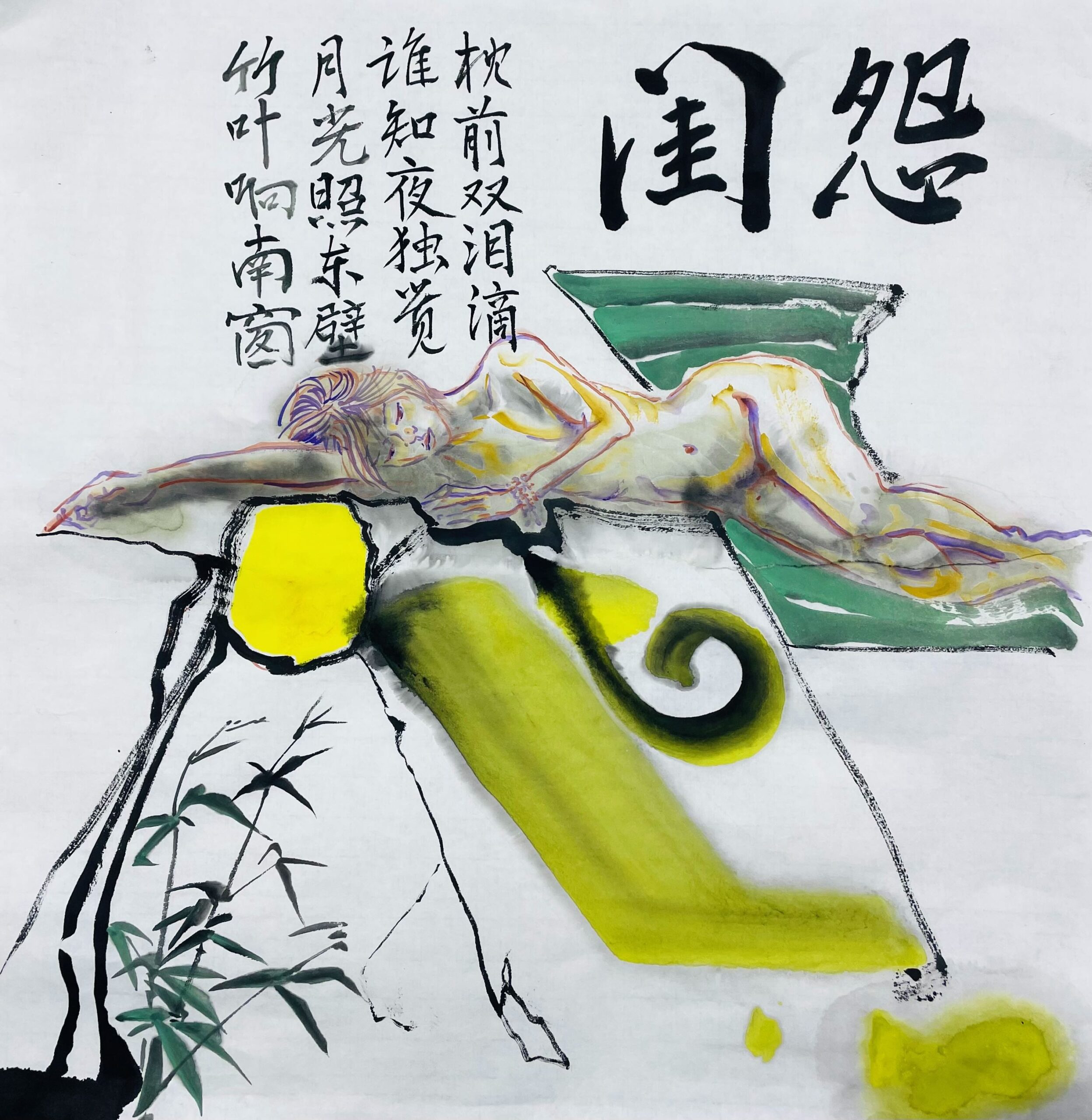
This illustration started with a quick drawing I did of a live model. It was a somewhat cynical experiment. I say cynical because I picked two random colors and in the end they didn’t look very good together, but I’m not sure it makes any difference. I’m not sure most viewers really know what they like. Much famous and exalted artwork is all over the place in terms of aesthetic appeal. When I paint, I often have my ideas about color and composition, but I’m not sure it will have any universal appeal. Or maybe I just really need to sell my aesthetic. Tell people what they like. Anyway, paintings can be appreciated for many reasons beyond any sort of visual beauty they possess.
This painting started as an unlikeable sketch of a model. Then my ink dish tipped over and turned the edge of the paper black. To make the best out of the accident, I drew some more black lines below the model. A few days later at home, I added some color and then Chinese calligraphy of a Song dynasty poem about a woman feeling sad waiting at home for her man to return. This is a whole sub-genre of classical Chinese poetry; men writing poems with a female narrator longing for a man. I have a substack strand devoted to Chinese poetry and philosophy translation.
This is the poem in this painting:
Bamboo leaves rustle against the southern window,
moonlight shines on the eastern wall.
Who knows at night alone I wake,
tears dripping before my pillow.
竹叶响南窗,
月光照东壁。
谁知夜独觉,
枕前双泪滴。